News
A Buyer’s Guide to WW2 ‘Big Eye’ Binoculars: What Collectors Should Look For

Aug
A Buyer’s Guide to WW2 ‘Big Eye’ Binoculars: What Collectors Should Look For
Second World War ‘Big Eye’ binoculars are highly collectable pieces of optical and military history. The best examples combine impressive engineering, historical significance and remarkable optical performance, even more than 80 years after they were manufactured.
For collectors, military history enthusiasts and those simply looking for an extraordinary set of usable vintage binoculars, choosing the right example requires more than looking at its external appearance.
Condition, optical clarity, manufacturer, wartime markings, originality and servicing can all make a significant difference.
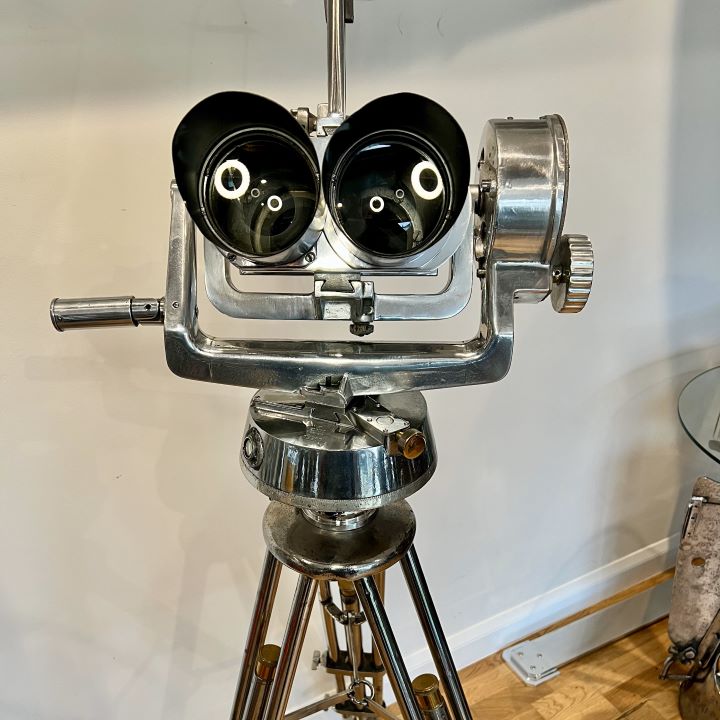
This buyer’s guide explains what to look for when buying WW2 Big Eye binoculars, with particular attention to the famous German 10×80 Flak binoculars, one of the most recognisable large-aperture military binocular designs of the Second World War.
What Are ‘Big Eye’ Binoculars?
The term ‘Big Eye’ binoculars is commonly used by collectors to describe large-aperture observation binoculars designed to provide a bright, wide and detailed view over long distances.
Unlike conventional handheld binoculars, many military Big Eye binoculars were designed to be used on a tripod or specialist mounting because of their size and weight.
During the Second World War, large military binoculars were used for a variety of observation roles, including aircraft identification, anti-aircraft observation, naval watchkeeping and general long-range surveillance.
Their large objective lenses were designed to gather significant amounts of light, helping observers maintain a clear view in difficult conditions.
Today, surviving examples appeal to collectors for several reasons. They represent an important part of military and optical history, they make impressive display pieces and, when correctly serviced and maintained, many can still provide an exceptional viewing experience.
Among the best-known examples are German 10×80 Flakglas binoculars, although several nations manufactured and used large-aperture military binoculars.
1. Understand What You Are Buying
During the Second World War, several nations produced high-quality military binoculars for observation, navigation, air defence and naval use.
German and Japanese optical manufacturers were particularly respected for their prism and lens design, with companies including Carl Zeiss, Emil Busch, Leitz and Nippon Kogaku producing notable examples.
When considering a pair of WW2 binoculars, try to establish:
The manufacturer
Model
Magnification
Objective lens aperture
Wartime markings or manufacturer codes
Optical condition
Mechanical condition
Originality
Accessories or mounting equipment
Any known provenance
It is important to remember that you are purchasing an optical instrument manufactured more than 80 years ago.
Historical significance is obviously important, but at Aviation & Binoculars we believe a quality pair of historic binoculars should, wherever possible, also perform as an optical instrument.
For this reason, Aviation & Binoculars only sources and sells binoculars that are in full working order and which have been fully serviced by our dedicated team of professionals.
2. Key Specifications to Check
Understanding a few basic specifications makes comparing vintage military binoculars considerably easier.
Magnification and Aperture
A marking such as 10×80 means the binoculars provide 10-times magnification and have 80mm objective lenses.
The large 80mm objective lenses gather considerably more light than conventional handheld binoculars, contributing to the distinctive viewing experience associated with Big Eye designs.
Field of View
Wide-field military binoculars were useful because observers needed to locate and follow moving aircraft, ships and other distant objects.
A good field of view remains one of the features that makes properly maintained military observation binoculars enjoyable to use today.
Optical Clarity
Optical condition is extremely important.
Look through both barrels and check for a clean, bright and sharp image. Signs of haze, fungus, scratches, chips, prism damage or excessive internal contamination should be investigated.
Mechanical Condition
Check focusing mechanisms, interpupillary adjustment, mounting points, eyecups and any filters or reticles.
Everything should operate as intended.
3. The German 10×80 Flakglas
In 1936, the German military sought a large-aperture observational binocular for air observation. This requirement led to the 10×80 format.
Emil Busch, supported by Zeiss, won the contract, and the resulting 10×80 Flakglas became widely used by the German armed forces, including the Wehrmacht, Kriegsmarine and Luftwaffe.
For today’s collector, German 10×80 binoculars are particularly attractive because they combine considerable visual presence with excellent optical performance and military history.
Different versions and external features can also be found.
For example, Kriegsmarine examples may have longer splash shields associated with naval use, while other models can differ in their finish, accessories, markings or mounting arrangements.
These variations can be highly interesting to collectors, but buyers should establish that the optical design, markings and physical characteristics are consistent with the claimed model.
4. Authenticity and German Wartime Manufacturer Codes
Authenticity is understandably one of the biggest considerations when buying German WW2 binoculars.
German wartime optical equipment often used three-letter manufacturer codes instead of displaying the manufacturer’s full name. These codes were intended to conceal the identity and location of factories producing military equipment.
When examining a set of binoculars, buyers should therefore consider the markings as part of the wider assessment of the instrument.
Check whether:
The manufacturer code is appropriate for the binoculars
Lettering and markings appear consistent with the period
Serial numbers are present
Magnification and aperture markings are correct
Other military or service markings are visible
The physical specification matches the claimed model
Examples can include D.F., referring to Doppelfernrohr or “double telescope”, together with manufacturer codes such as CXN, associated with Emil Busch, or BLC, associated with Carl Zeiss.
Additional markings may indicate particular specifications or features, including lubrication suitable for use in cold climates.
Manufacturer codes are useful evidence, but a code alone should not be treated as proof of authenticity. The complete instrument, construction, optics, markings and condition should make sense together.
5. Why Condition Matters With 80-Year-Old Optics
One of the biggest mistakes when buying collectable WW2 binoculars is concentrating entirely on external appearance.
A set can look impressive while having significant problems internally.
Potential optical issues can include:
Fungus
Internal haze
Scratched or damaged lenses
Prism damage
Contamination
Poor alignment
Deterioration caused by previous storage conditions
One particularly important consideration is collimation.
The optical paths through the two barrels need to be correctly aligned so that your eyes see a comfortable single image. Poorly aligned binoculars can make viewing uncomfortable regardless of how impressive the instrument looks externally.
This is one reason why buyers should ask whether vintage binoculars have been professionally inspected and serviced rather than assuming that an attractive exterior means they are ready to use.
6. Original Condition, Restoration and Servicing
Collectors understandably value originality.
Original paint, manufacturer markings, eyecups, filters, mounts and other period components can all contribute to the historical interest of a set of wartime binoculars.
However, originality and optical usability are two different considerations.
A completely untouched instrument may retain considerable historical character while suffering internally from decades of deterioration. Conversely, excessive or inappropriate restoration could remove features that collectors value.
A good example should therefore achieve an appropriate balance between preserving its historical character and ensuring that the optical and mechanical components function correctly.
Before buying, ask:
Has the instrument been professionally inspected?
Have the optics been cleaned or serviced?
Has collimation been checked?
Are the major components original?
Has any restoration or repainting been undertaken?
Does everything operate correctly?
At Aviation & Binoculars, we believe historically important binoculars should remain more than static display pieces wherever possible. Our binoculars are selected and serviced with the intention that their owners can experience the optical engineering that made these instruments so impressive in the first place.
7. What Makes One Pair More Collectable Than Another?
There isn’t a single factor that determines whether one set of WW2 Big Eye binoculars is more desirable than another.
Collectors may consider a combination of:
Manufacturer
Examples from recognised wartime optical manufacturers can attract particular interest.
Rarity
Less frequently encountered variants, specifications or military configurations may be especially desirable to specialist collectors.
Markings
Clear manufacturer codes, serial numbers and military markings can help tell the history of an individual instrument.
Originality
Original finishes, components, accessories and mounts can add significantly to an item’s historical interest.
Condition
Both cosmetic and optical condition matter. A visually impressive set with excellent working optics is very different from one requiring significant restoration.
Accessories
Original mounts, filters, cases, eyecups and other associated equipment can make an example more complete and desirable.
Provenance
Where genuine documented history exists, knowing where or how an instrument was used can add another dimension to its appeal.
Collectors should therefore look at the complete history, specification and condition of a set rather than judging it on one characteristic alone.
8. WW2 Binocular Buyer’s Inspection Checklist
Before purchasing WW2 military binoculars, consider the following.
Optics
Look through both barrels and check sharpness, brightness and alignment. Look carefully for haze, fungus, scratches or evidence of prism damage.
Body Condition
Check for dents, corrosion, cracks, missing screws, repainting or signs of heavy restoration.
Some wear is entirely understandable on an 80-year-old military instrument and can form part of its history. The important consideration is whether the condition is consistent with how the binoculars are being described.
Markings
Check the model, magnification, aperture, serial number, wartime manufacturer code and any military or service markings.
Mechanical Operation
Make sure adjustment and focusing mechanisms operate correctly and inspect the mounting arrangement.
Servicing
Ask when the binoculars were last inspected or serviced and what work was undertaken.
Provenance and History
If particular historical claims are being made about an individual set, ask what evidence supports them.
9. What Do You Want From Your Big Eye Binoculars?
Different buyers have different priorities.
Someone building a specialist collection may prioritise manufacturer, rarity, originality and wartime markings.
Another buyer may want an impressive historic centrepiece for a home, office, corporate environment or showroom.
Others want to actually use their Big Eye binoculars for landscape observation or viewing the night sky.
Understanding what matters most to you makes choosing the correct set considerably easier.
If you are unsure, ask questions.
At Aviation & Binoculars, we are always happy to discuss individual examples and help identify a set of binoculars appropriate for your requirements.
Frequently Asked Questions About WW2 Big Eye Binoculars
What are Big Eye binoculars?
Big Eye binoculars are large-aperture observation binoculars. The term is commonly associated with large military and naval binoculars designed for long-range observation. Their size means many examples are designed to be used with a dedicated mount or tripod.
What does 10×80 mean on binoculars?
The first figure describes magnification and the second refers to the diameter of the objective lenses. Therefore, 10×80 binoculars provide 10-times magnification with 80mm objective lenses.
What are German 10×80 Flak binoculars?
German 10×80 Flak binoculars, often referred to as 10×80 Flakglas, are large military observation binoculars associated with German forces during the Second World War. Their distinctive appearance, large objective lenses and wartime history have made surviving examples particularly interesting to military optics collectors.
How can you tell whether WW2 binoculars are authentic?
Manufacturer codes, serial numbers, military markings, construction, optical configuration and overall condition should all be considered. No individual marking should be relied upon in isolation. If in doubt, seek advice from someone experienced with historic military optics.
Can WW2 military binoculars still be used today?
Yes. A well-maintained and correctly serviced set of Second World War binoculars can remain a highly usable optical instrument. Condition is crucial, however, which is why professional inspection and servicing are particularly important when dealing with optics more than 80 years old.
What should I check before buying vintage military binoculars?
Check optical clarity, collimation, mechanical operation, body condition, markings, manufacturer, serial numbers and originality. You should also ask whether the binoculars have been professionally serviced and whether any significant restoration has taken place.
Buy WW2 Big Eye Binoculars With Confidence
Buying an important piece of military optical history should be an enjoyable experience.
Whether you are an established collector, buying your first pair of vintage military binoculars, searching for an unusual gift or looking for an impressive historical display piece, take time to understand exactly what you are purchasing.
Aviation & Binoculars specialises in sourcing and supplying historic military optics, including WW2 binoculars, German 10×80 binoculars and Big Eye binoculars.
Our emphasis is on authenticity, historical significance, condition and usability, with binoculars professionally serviced so their remarkable optical engineering can continue to be appreciated today.
Looking for WW2 Big Eye Binoculars?
If you are considering buying a German 10×80 Flakglas or another set of historic military binoculars, contact Aviation & Binoculars.
We are happy to discuss the model, manufacturer, markings, optical condition and intended use and help you find a professionally serviced example suited to your collection or requirements.
Explore our Big Eye Binoculars →