News
German vs Japanese WW2 Binoculars: A Collector’s Guide
Oct
German vs Japanese WW2 Binoculars: A Collector’s Guide
German and Japanese WW2 binoculars are among the most fascinating examples of military optical engineering from the Second World War. From precision-built German Zeiss binoculars to the enormous Japanese naval Big Eye binoculars, both countries produced remarkable instruments that remain highly desirable among collectors today.
But what are the differences between German and Japanese wartime binoculars, and which should you choose?
German WW2 binoculars are particularly admired for their precision engineering, specialised military designs and versatility. Japanese WW2 binoculars are especially renowned for their large naval observation instruments, impressive magnification and distinctive appearance.
At Aviation & Binoculars, we specialise in sourcing, restoring and supplying authentic military binoculars. Our experience with both German and Japanese examples allows us to help collectors understand their history, appreciate their engineering and choose the right instrument for their collection, home or office.
German WW2 Binoculars: Precision and Engineering
Germany entered the Second World War with one of the world’s most established optical industries.
Manufacturers such as Carl Zeiss Jena had developed an international reputation for precision instruments, optical glass and innovative binocular designs.
During the war, German manufacturers produced an extensive range of military binoculars for different applications, including:
Anti-aircraft observation and Flak gun emplacements
Naval and U-boat operations
Artillery observation and rangefinding
Infantry and battlefield reconnaissance
Long-distance observation and military surveillance
German military binoculars often featured sophisticated optical arrangements, robust construction, specialist mounting systems and, on certain models, interchangeable or built-in filters.
Their diversity makes German WW2 binoculars particularly interesting to collectors who appreciate mechanical engineering and military history.
Iconic German WW2 Binocular Models
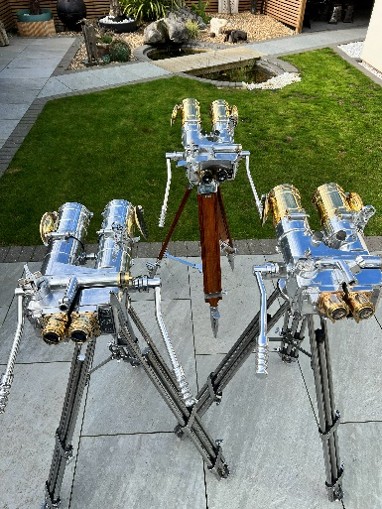
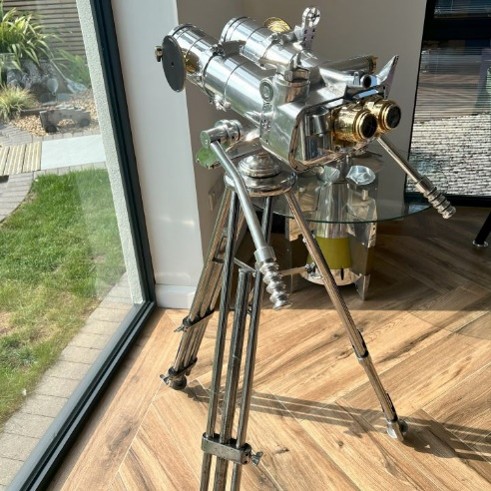
German 10×80 Flakfernrohr Binoculars
The German 10×80 Flakfernrohr is one of the most recognisable military binocular designs of the Second World War.
With 10-times magnification and large 80 mm objective lenses, these binoculars were designed for observation duties associated with German anti-aircraft operations.
Many examples feature angled eyepieces, allowing comfortable observation when mounted on a suitable stand.
Today, restored 10×80 Flak binoculars are popular with collectors because of their distinctive appearance, historical significance and impressive optical performance.
For a more detailed examination of their development and wartime use, read our guide to German 10×80 Flak Binoculars: History, Models & Wartime Use.
Zeiss 12×60 D.F. Binoculars
The Zeiss 12×60 D.F. is another highly collectable German military optical instrument.
These binoculars were associated with specialist military observation equipment, including rangefinding and anti-aircraft installations.
Their precision construction, unusual mechanical arrangements and distinctive appearance make them especially attractive to enthusiasts of German wartime engineering.
At Aviation & Binoculars, we have handled and supplied examples of these remarkable instruments.
German U-boat 7×50 Binoculars
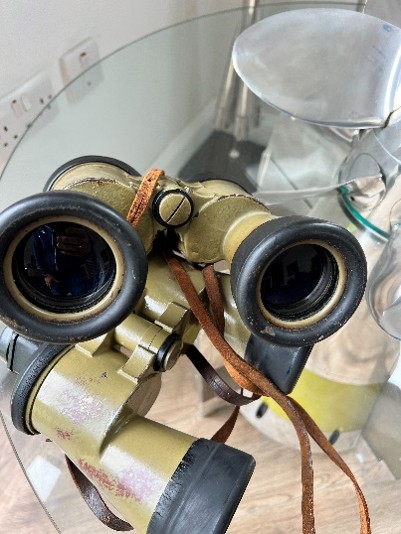
German naval binoculars, particularly 7×50 models associated with the Kriegsmarine and U-boat service, are among the best-known examples of wartime marine optics.
The combination of 7-times magnification and 50 mm objective lenses offered a useful balance of image brightness, field of view and handheld practicality.
Some specialised naval models incorporated fixed-focus arrangements, protective coatings or other features suited to demanding marine environments.
Original wartime markings, manufacturer details and construction features are particularly important when assessing these binoculars.
German Kriegsmarine 10×80 Binoculars
Large German naval binoculars were designed for observation over considerable distances at sea.
Certain 10×80 Kriegsmarine models featured extended protective hoods, substantial housings and mounting arrangements suited to shipboard use.
Their imposing design makes them attractive both as historical collectables and as functional display pieces.
Japanese WW2 Binoculars: Masters of Naval Observation
While Germany developed a wide variety of specialist military optics, Japan became particularly associated with large naval observation binoculars.
The Imperial Japanese Navy operated across enormous areas of the Pacific, where detecting distant ships, aircraft and other objects was strategically important.
Large-aperture binoculars were valuable because their substantial objective lenses gathered more light, helping observers identify distant objects under suitable viewing conditions.
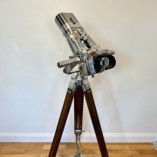
Japanese manufacturers developed impressive naval instruments, including large mounted binoculars that collectors commonly describe as Big Eye binoculars.
Important Japanese Binocular Manufacturers
Nippon Kogaku – Later Nikon
Founded in 1917, Nippon Kogaku developed into one of Japan’s most important optical manufacturers.
The company produced optical instruments for military and industrial applications, including equipment associated with Japan’s armed forces.
Its development was influenced by Japan’s need to establish a domestic optical industry and reduce dependence on imported optical materials and expertise.
Nippon Kogaku later became internationally recognised through the Nikon brand.
Original Nippon Kogaku military binoculars remain of considerable interest to collectors.
Tokyo Optical – Toko
Tokyo Optical, associated with the Toko name, was another important Japanese optical manufacturer.
Its products included military observation instruments, and surviving examples provide an insight into Japan’s wartime optical manufacturing capabilities.
Collectors should examine manufacturer markings, construction and individual model specifications when identifying these binoculars.
Fuji and Fujinon
Fuji-related optical manufacturers and the later Fujinon name are closely associated with Japanese binocular development.
However, collectors should distinguish between wartime Japanese instruments and later post-war Fuji or Fujinon binoculars.
Large post-war Japanese naval and observation binoculars can be highly desirable in their own right, but their production dates should be established before describing them as WW2 examples.
Iconic Japanese Naval Binocular Models
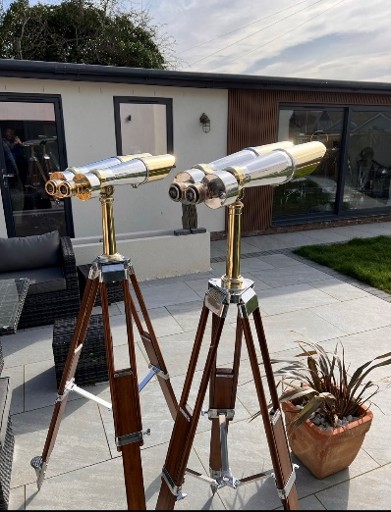
Japanese 15×80 Big Eye Binoculars
The Japanese 15×80 is a striking example of large naval observation binocular design.
With 15-times magnification and 80 mm objective lenses, these instruments offered powerful observation capabilities.
Their substantial size and weight meant that a stable mounting arrangement was essential for comfortable use.
Straight-through eyepiece arrangements gave many examples a distinctive appearance, making them particularly appealing as statement pieces in homes, offices and coastal properties.
Large Japanese 20×120 and 25×150 Binoculars
Among the most impressive large-format Japanese optical designs are binoculars with specifications such as 20×120 and 25×150.
The numbers describe their magnification and objective lens diameter.
For example, 25×150 binoculars provide 25-times magnification with 150 mm objective lenses.
These enormous instruments demonstrate the scale of Japanese naval and long-range observation optics.
Their size, mechanical construction and optical capabilities make them particularly impressive collector and display pieces.
However, not every surviving 20×120 or 25×150 Japanese binocular is a wartime example. Some models and variants belong to the post-war period, so manufacturer markings, design details and provenance must be examined individually.
For more information about large naval observation instruments, explore our Big Eye Binoculars Buyer’s Guide.
German vs Japanese WW2 Binoculars: Key Differences
Both German and Japanese military binoculars offer exceptional collecting appeal, but their designs often reflect different operational priorities.
| Feature | German WW2 Binoculars | Japanese WW2 Binoculars |
|---|---|---|
| Notable strengths | Precision engineering and specialised designs | Large naval observation optics |
| Typical applications | Army, naval, artillery and anti-aircraft use | Naval and military observation |
| Recognised models | 10×80 Flak, 12×60 D.F., 7×50 naval | 15×80 and other large naval models |
| Optical arrangements | Straight and angled eyepieces, depending on model | Straight and angled arrangements, depending on model |
| Collector appeal | Technical features, markings and wartime history | Scale, naval history and visual impact |
| Display suitability | Excellent with suitable mounting | Particularly striking with large stands |
| Practical considerations | Model-dependent servicing and mounting | Weight, space and stable mounting |
Neither country’s binoculars can automatically be considered superior.
Optical quality depends on the individual model, its original design, manufacturing quality, condition and the standard of any subsequent restoration.
For collectors, the most suitable choice is often determined by intended use and personal preference rather than nationality alone.
Which WW2 Binoculars Should You Buy?
At Aviation & Binoculars, we believe there are three important considerations when choosing between German and Japanese military binoculars.
1. Intended Use: Where Will You Use Them?
Consider where the binoculars will be positioned and what you intend to observe.
For a property overlooking the sea, large Japanese-style naval binoculars can provide a remarkable viewing experience.
Mounted on a suitable adjustable stand, they are ideal for observing distant coastal scenery, shipping and other points of interest.
German 10×80 Flak binoculars and certain 12×60 instruments offer alternative viewing arrangements and can be particularly attractive where angled eyepieces are preferred.
Both German and Japanese instruments may also be suitable for astronomical observation, although performance and comfort depend on the individual model, mounting system and optical condition.
2. Appearance: A Piece of History for Your Home or Office
Owning authentic military binoculars is about more than their practical optical performance.
These instruments are extraordinary examples of twentieth-century engineering and can become distinctive features in a home, office, study or commercial setting.
German military binoculars often appeal to collectors who appreciate intricate mechanical details, specialist controls and distinctive wartime designs.
Large Japanese naval binoculars offer a different visual appeal, with substantial objective lenses, long optical housings and imposing mounting arrangements.
At Aviation & Binoculars, we understand that presentation is an important part of the buying experience.
Our restored binoculars can offer both historical character and a striking visual presence, with display arrangements suited to individual instruments.
3. Authenticity, Condition and Long-Term Collecting Appeal
When purchasing WW2 binoculars, authenticity and condition should always take priority.
Collectors should consider:
Original manufacturer markings and identification codes
Whether the instrument is genuinely from the stated period
Optical clarity and internal condition
Mechanical operation and focusing
Evidence of repairs, replacement parts or modifications
Provenance and available supporting documentation
The quality and extent of restoration work
At Aviation & Binoculars, authenticity and restoration quality are central to the way we source and present our military binoculars.
Our specialist servicing experience helps ensure that customers understand the history, condition and practical capabilities of the instruments they purchase.
Rare and desirable military binoculars can retain considerable collector interest, but future values depend on condition, originality, rarity and market demand. They should not be regarded as a guaranteed financial investment.
How to Identify Authentic WW2 Binoculars
Not every vintage military binocular is a genuine Second World War example.
Some designs remained in production after 1945, while others were modified, refurbished or reused by military organisations.
Collectors should therefore look beyond appearance alone.
Manufacturer markings, serial numbers, optical specifications, construction methods and documented provenance can all help establish an instrument’s origin.
Originality is especially important when purchasing expensive German or Japanese military optics.
For further advice, read our How to Identify Authentic WW2 Binoculars guide and our article covering German 10×80 binocular manufacturers and wartime codes.
These guides provide additional information for collectors seeking to understand military optical markings and identify genuine wartime instruments.
Why Buy Restored Military Binoculars from Aviation & Binoculars?
At Aviation & Binoculars, we specialise in authentic military optics and historically significant collectables.
Our collection includes German, Japanese and other military binoculars, with a particular interest in large observation instruments and distinctive wartime designs.
We understand that purchasing an original military binocular is a significant decision, particularly when choosing a rare or valuable example.
Our approach focuses on:
Authenticity and historical significance
Specialist knowledge of military optical equipment
Careful servicing and restoration
Clear information about individual instruments
Attractive and practical display solutions
Helping collectors select binoculars suited to their requirements
Whether you are an experienced collector or purchasing your first set of historic military binoculars, we can help you explore the available options.
Explore our WW2 Binoculars and Big Eye Binoculars collections, or contact Aviation & Binoculars to discuss current availability and specialist advice.
Frequently Asked Questions About German and Japanese WW2 Binoculars
Are German WW2 binoculars better than Japanese binoculars?
Not necessarily. German manufacturers were renowned for precision engineering and a broad range of specialist military optics, while Japanese manufacturers produced notable naval observation instruments. The better choice depends on the model, condition and intended use.
What are Japanese Big Eye binoculars?
Big Eye binoculars are large observation binoculars, commonly associated with naval and long-distance viewing. The term is often used for instruments with large objective lenses, including 15×80 and other substantial mounted binocular designs.
Are Zeiss WW2 binoculars collectable?
Yes. Original Zeiss military binoculars are popular among collectors because of their engineering, historical associations and range of specialist designs. Authenticity, condition and provenance can significantly influence desirability.
Can WW2 military binoculars still be used today?
Many original military binoculars can remain functional when properly maintained and serviced. Their usability depends on optical condition, mechanical operation, mounting requirements and any deterioration or modifications over time.
How can I tell whether Japanese naval binoculars are from WW2?
Examine the manufacturer markings, model specifications, construction details and available provenance. Some large Japanese naval-style binoculars were manufactured after the war, so appearance alone cannot confirm a wartime date.
Which binoculars are best for a coastal property?
Large mounted naval binoculars can be an excellent choice for coastal observation. Japanese-style Big Eye binoculars offer impressive magnification and visual impact, while some German military designs provide alternative eyepiece arrangements and viewing characteristics.
Where can I buy authentic German or Japanese military binoculars in the UK?
Aviation & Binoculars specialises in restored historic military binoculars, including German and Japanese examples. Contact our team to discuss current stock, authenticity, servicing and suitable display options.
Conclusion: German or Japanese WW2 Binoculars?
German and Japanese WW2 binoculars represent two fascinating traditions in military optical engineering.
German examples are particularly admired for their precision, technical variety and specialised military applications. From the famous 10×80 Flakfernrohr to Zeiss naval instruments, they demonstrate the sophistication of Germany’s wartime optical industry.
Japanese binoculars are especially associated with large naval observation instruments. Their substantial objective lenses, powerful magnification and distinctive construction make them attractive to collectors seeking something visually impressive and historically interesting.
Ultimately, choosing between them comes down to your interests, available space and intended use.
Whether you prefer the mechanical sophistication of German military optics or the imposing presence of Japanese naval binoculars, an authentic, professionally serviced instrument offers a remarkable opportunity to own and use a piece of optical history.
At Aviation & Binoculars, we can help you find the right historic binoculars for your collection, home or office. Explore our available military binoculars or contact us for specialist advice.